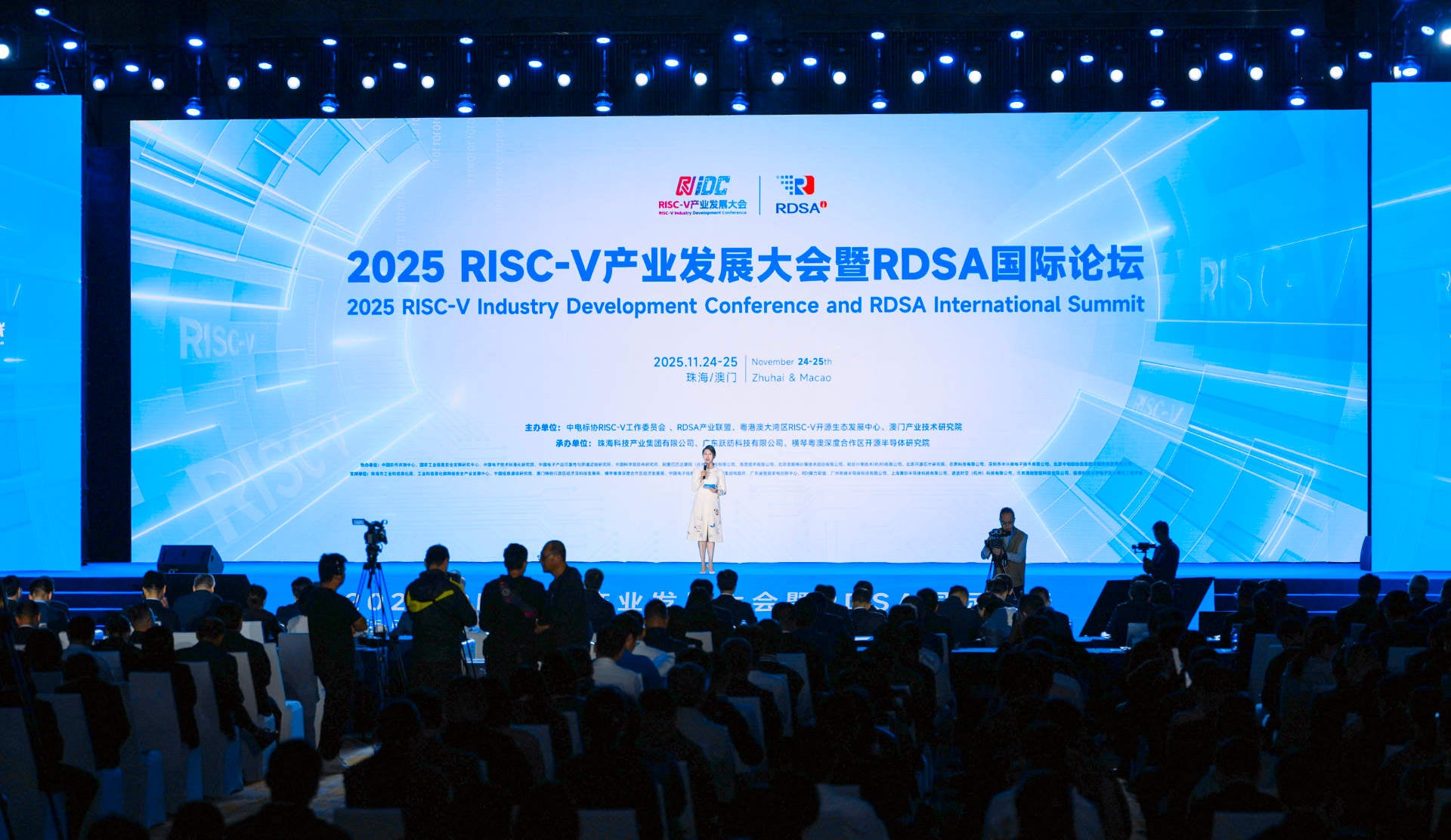

I have just returned from the 2025 RISC-V Industry Development Conference, held across Zhuhai and Macau. Guided by the 2025 theme “Accelerating Standardization, Facilitating Connection” and hosted by the RISC-V Ecosystem & Industry Committee (RVEI), the event was a real highlight for those of us working to advance the RISC-V ecosystem both in China and across the globe. And it was a truly global event, bringing together nearly a thousand attendees, including experts, scholars, academicians, industry leaders, and representatives from all over the world.
The conference showcased the latest technological progress, industrial applications, and global cooperation trends in the RISC-V ecosystem. Across the two main forums and the eight technical sub-forums, a series of industry-ready and product releases underscored the accelerating maturation and large-scale adoption of RISC-V as an open, global computing architecture.
Processor IP Moving Toward System-Level Solutions
Driven by global industry collaboration, the RISC-V technology stack has continued to mature. With the release of the RVA23 profile, key capabilities required for high-performance computing, artificial intelligence (AI) workloads, and data center compute have been further standardized.
Speakers at the 2025 RISC-V Industry Development Conference noted that as AI continues to evolve, RISC-V’s inherent qualities – simplicity, flexibility, openness, and extensibility – are uniquely aligned with AI-native compute needs. These strengths stand out particularly in fast-changing operator design and customizable architecture extensions. Academician of the Chinese Academy of Engineering, Ni Guangnan, emphasized in his keynote that RISC-V is becoming an essential foundation for compute innovation in the AI era, and its industry impact will continue to expand.
Against this backdrop, RISC-V innovation is moving beyond individual IP toward an integrated model of “IP + system solutions + industry applications”.
The conference also celebrated 2025’s Outstanding RISC-V Products and Solutions, highlighting year-on-year breakthroughs from IP to commercial deployment. As a relatively new ISA with a limited number of physical products and solutions until recently, it was wonderful to see real devices reach tape-out. Several new RISC-V solutions for AI and emerging applications made their debut, demonstrating full-stack progress, from architecture design and ecosystem enablement to real industry integration, as well as offering technical validation for broader market adoption.
Expanding Applications From Edge to Enterprise
Recent global research indicates that RISC-V’s adoption is rapidly expanding beyond traditional low-power use cases into high performance computing and AI computing. From the unique and performant use cases I learned about at the conference, I have no doubt that this is absolutely happening. This shift is shaping an industry pattern characterized by “one architectural, one unified software foundation, and broad vertical applications.”
Across both the main forum and the breakout sessions at the 2025 RISC-V Industry Development Conference, it was clear to me that RISC-V is gaining traction across a broad spectrum of industries – well beyond the relatively self-contained presence in the embedded market that the ISA has been traditionally known for. I learned that in intelligent industrial Internet of Things (IoT) applications, for example, RISC-V-based high-performance Human-Machine Interface (HMI) systems, real-time signal-processing units, and Real-time Operating System (RTOS) components are being deployed to aid smart manufacturing.
And in smart city infrastructure, RISC-V edge nodes, intelligent sensors, and data-collection terminals are enhancing operational efficiency and reliability.
Meanwhile, in high-performance computing (HPC), particularly HPC enabled by AI, we see new RISC-V-based enterprise SSDs, AI inference cards, network switches, and integrated compute-network appliances emerging, establishing a next-generation computing foundation for AI-driven workloads.
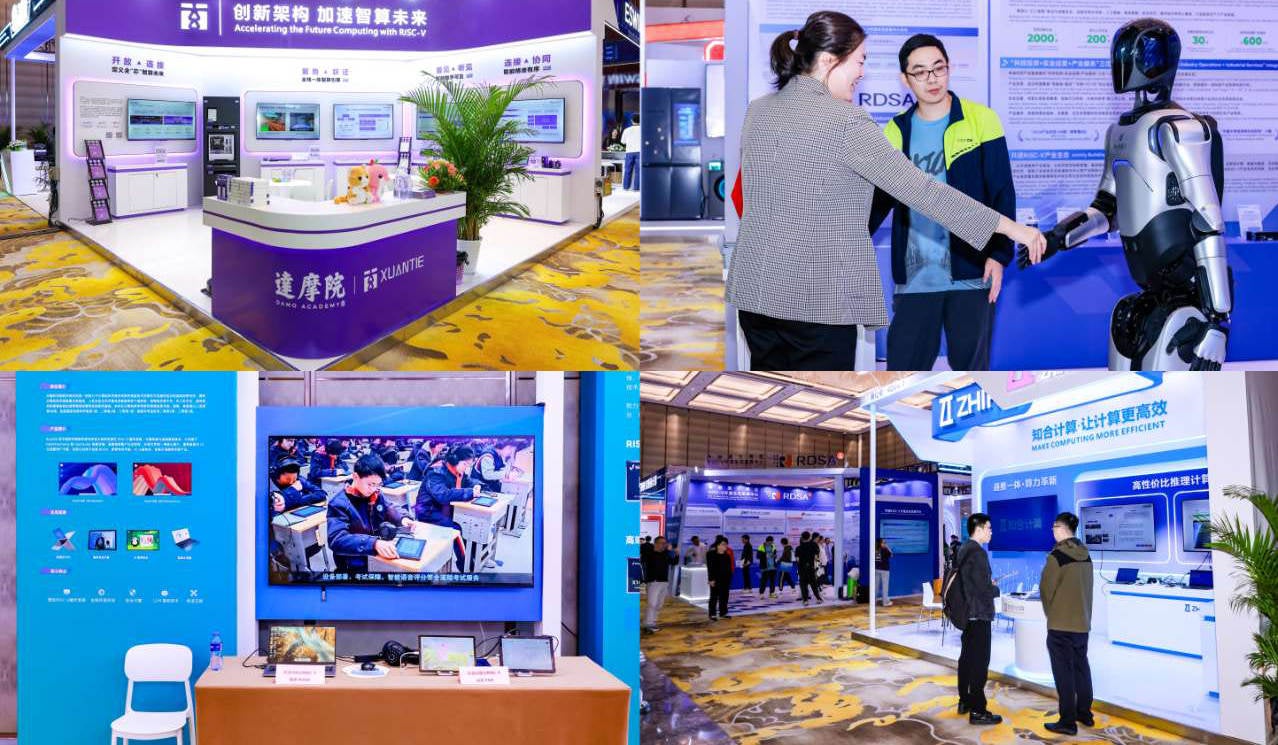
Across the conference, companies showcased mass-produced RISC-V products and diverse ecosystem solutions – from industrial intelligence platforms to edge acceleration in consumer devices (yes, RISC-V in consumer applications!), and unified compute engines for servers and networking equipment. These developments highlighted RISC-V’s accelerating adoption and vast potential across sectors; a clear signal to me and all attendees that RISC-V has transitioned from ‘feasible’ to truly ‘commercial’.
Fascinating Speaker Sessions
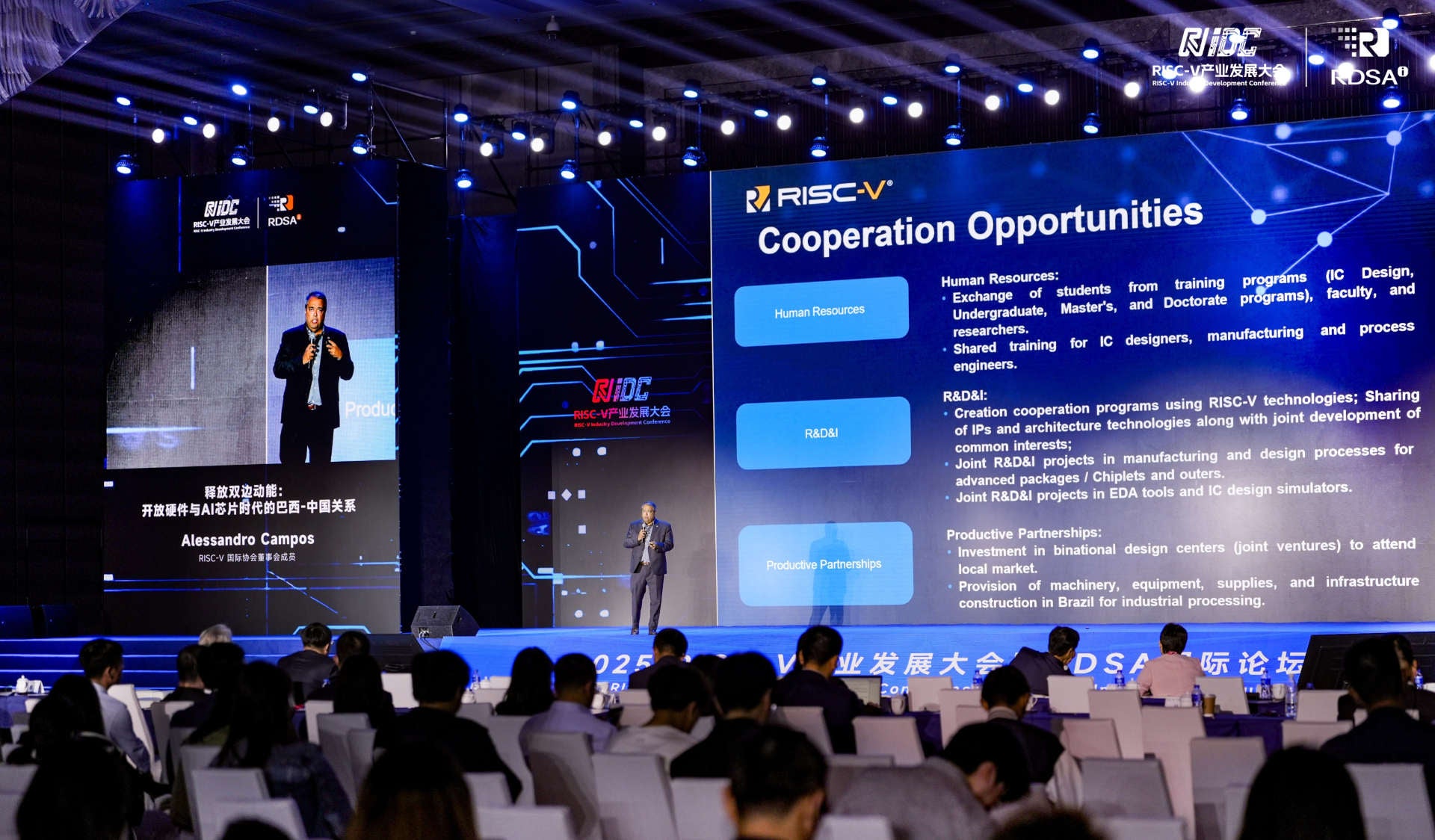
Amid rapid global open collaboration, the RISC-V ecosystem has achieved notable progress over the past year in platform development, cross-regional cooperation, and community participation. The global industrial value chain is becoming increasingly coordinated and structured.
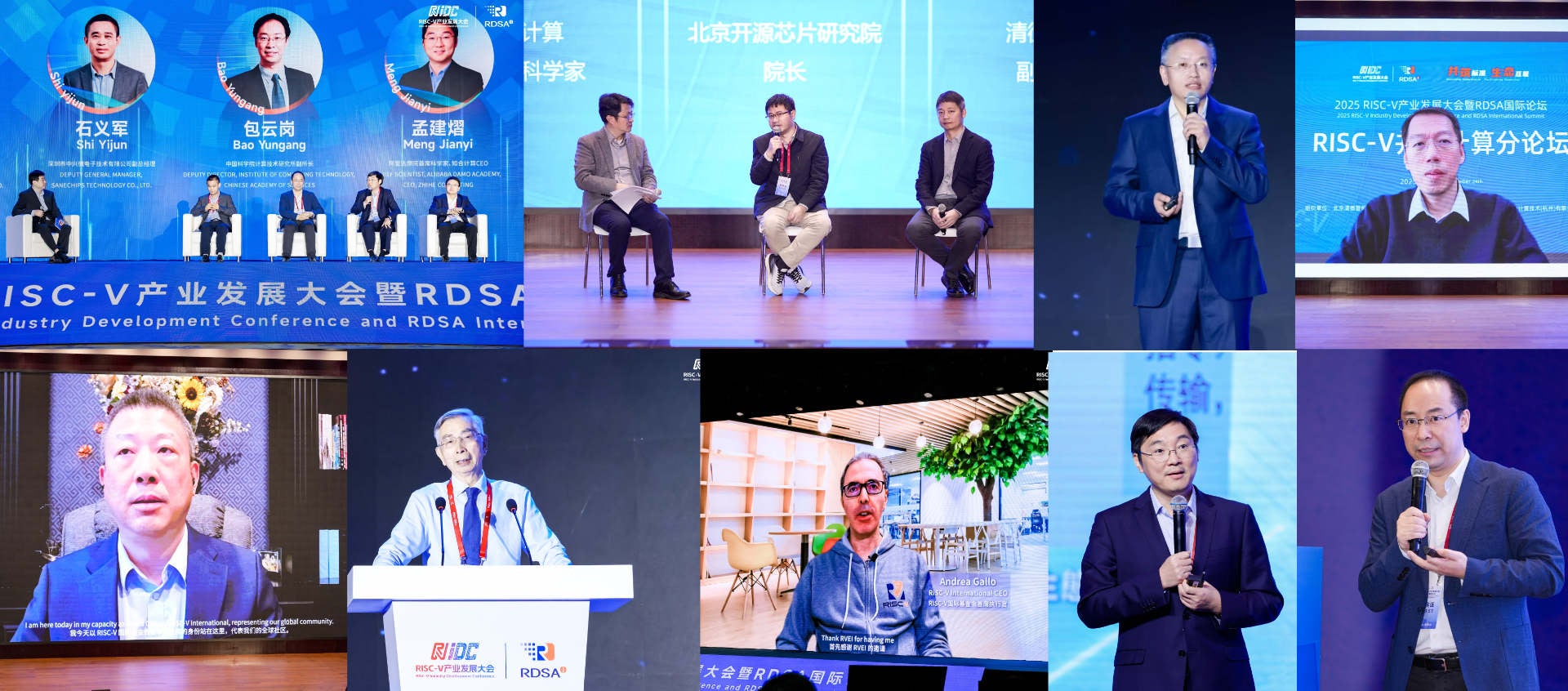
This year’s conference particularly reflected this trend. I enjoyed hearing from distinguished speakers from around the world, including RISC-V International’s Chairman of the Board Lu Dai, RISC-V International CEO Andrea Gallo, General Coordinator of Semiconductor Technologies, Ministry of Science, Technology and Innovation (Brazil) Alessandro Campos, and Siva Munnangi, Vice President of Business Operations at GSME. They each shared deep insight into global standards development, industry deployment, and multi-regional cooperation, and their perspectives highlighted to me the growing diversity and maturity of the global RISC-V ecosystem.
During the event, CESA and the Brazilian Semiconductor Industry Association signed a memorandum of understanding, further strengthening cross-regional technical collaboration and contributing to the continued growth of open computing architectures worldwide.
The Future is Open, and Very Exciting!
More than ever, the 2025 RISC-V Industry Development Conference demonstrated how rapidly global momentum of RISC-V is accelerating. With its open, transparent, and extensible architecture, RISC-V is shaping a more inclusive and sustainable foundation for the worldwide computing industry.
Looking ahead, as AI continues to drive demand for diversified and scalable compute, RISC-V is perfectly positioned to play an increasingly vital role in global technological advancement. Ecosystem partners across regions are working hard to deepen collaboration through open-source and open standard communities, industry alliances, and joint initiatives, further advancing this next-generation computing architecture toward broader and more impactful adoption. These collective efforts will continue to support the growth of the global ecosystem and shared technological progress. I’m already looking forward to next year’s event. If you’d like to join us, keep an eye on the our website!

The RISC-V Ecosystem & Industry (RVEI) organization in China is one of many regional and industry alliances we maintain around the world. Together, they help us to promote RISC-V as an international and vibrant community.